APPOINTMENT FACTS
Below you’ll find everything you’ll need to bring to your appointment, along with what to expect during your visit so you can feel prepared and at ease.

ID REQUIREMENTS
Adults (18 & Over)
All clients 18 and over must present a valid, government-issued photo ID at the time of their appointment.We also accept a clear and legible photo of your government-issued ID.
for minor id requirements please click the minor info link above.

PAYMENT OPTIONS
We accept cash, Apple Pay, Afterpay, and all major credit cards. All of our locations are equipped with convenient tap-to-pay options for a seamless checkout experience.

Gratuity & Appreciation
While tipping is never expected, it is always appreciated. If you’d like to express your gratitude to your piercer or our team, gratuity is a generous way to do so.
And yes — caffeine and sweets are universally loved around here.

Outside Jewelry Policy
While we’re unable to install outside jewelry, we’re committed to ensuring that every piece used at HPC meets the highest standards for safety and quality.
When jewelry is brought in from outside sources, we’re unable to verify the material, manufacturing process, or whether it is safe for wear in the body.
The good news? We carry a wide variety of high-quality options in-studio, and we’re confident you’ll find something you love.
Can I Go Swimming?
After receiving a new piercing, you’ll need to avoid submerging it in water for a minimum of 6 weeks. All bodies of water can harbor bacteria that may increase the risk of infection while your piercing is healing.
This includes oceans, pools, hot tubs, ponds, lakes, rivers, and even bathtubs — essentially any situation where your piercing would be fully submerged.
Showering, however, is perfectly fine (and encouraged!).
Anatomy & Piercing Suitability
The beautiful thing about being human is that we’re all different — every ear, every nose, every body is uniquely our own. Because of this, a piercing that works beautifully for one person may not be the right fit for another.
That’s why anatomy checks are an essential part of your pre-piercing consultation. We take the time to carefully assess your anatomy to ensure the piercing you choose is safe, suitable, and positioned for long-term success. Walk-ins are always welcome for consultations.
Below, we’ve outlined common piercings that require an anatomy check.
NAVEL PIERCINGS
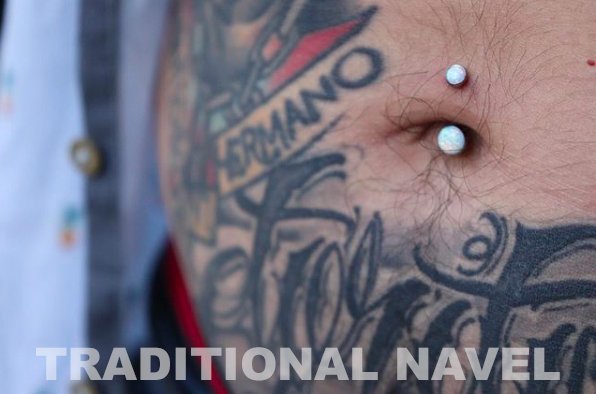
The traditional navel piercing is one of the most popular placements and what most people picture when they think of a belly button piercing.
However, not all navels are suited for this style. A traditional navel piercing requires a defined “lip” — the flap of skin above the indentation — with enough depth inside the navel for the jewelry to sit comfortably and heal properly.
If your anatomy isn’t ideal for this placement, alternative options may be available. We’ll assess this during your consultation to ensure the safest and best result for you.

A floating navel is performed like a traditional navel piercing — the difference is in the jewelry style.
This option is often recommended if there isn’t enough room inside the navel for traditional jewelry to sit comfortably, or if your navel collapses when sitting or bending. In these cases, traditional jewelry can cause pressure and discomfort, affecting healing.
During your consultation, we’ll assess your anatomy and recommend the most comfortable and suitable option for you.

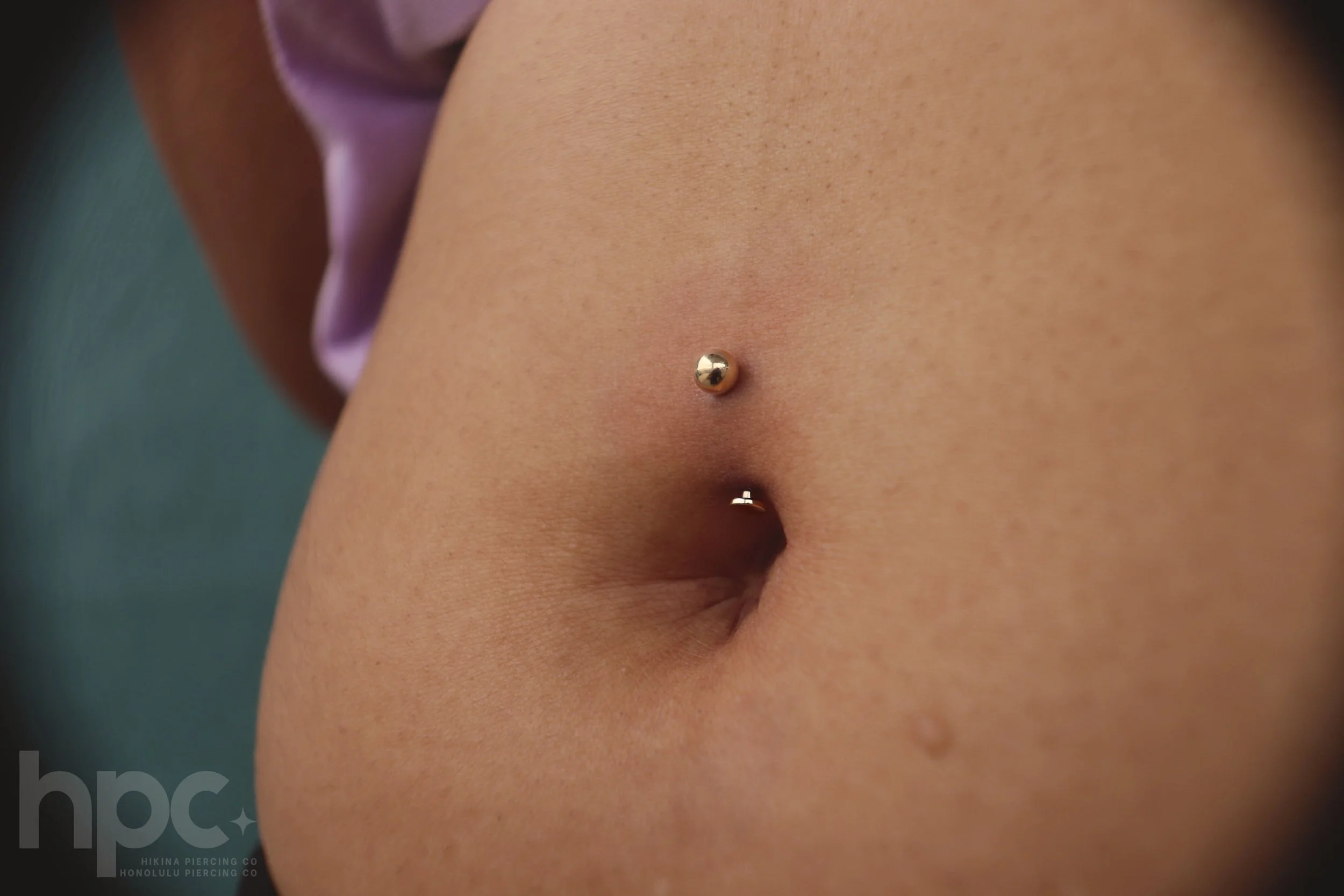
A lower navel piercing is a stylish alternative to the traditional placement. Like a traditional navel, it requires specific anatomy to support it.
Instead of a defined “lip” at the top of the navel, a lower navel piercing requires supportive tissue at the bottom. Some clients may not have the anatomy for a traditional navel but are great candidates for a lower placement.
During your consultation, we’ll assess your anatomy and guide you toward the option that will both look beautiful and heal properly.
NIPPLE PIERCINGS
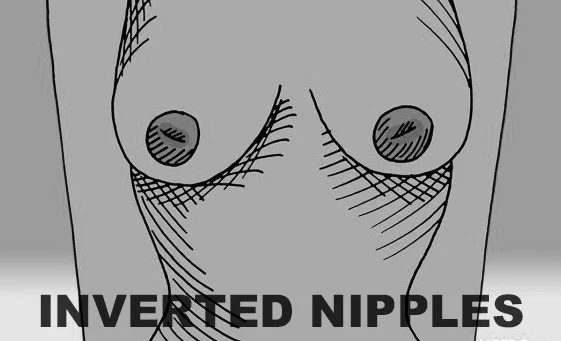
An inverted nipple is a common condition where the nipple sits inward rather than protruding outward.
During your consultation, we’ll assess whether a piercing can be performed safely and without excessive pressure on the jewelry. We’ll also evaluate whether the nipple can protrude with gentle tissue manipulation and if there is enough structure to support proper healing.
If we determine that you’re not a candidate, it’s simply because we believe healing would be difficult or unlikely. Our priority is always your safety, comfort, and long-term results.

A supernumerary nipple — often referred to as a “third nipple” — is a fairly common congenital variation. They’re typically located along the chest and occasionally on the abdomen, and are often smaller or less pronounced than the primary nipples.
In many cases, the anatomy may not be suitable for piercing. During your consultation, we’ll assess whether there is enough structure to safely support jewelry and heal properly.
And a fun note — if you come in for a piercing and happen to have a third nipple that is anatomically pierce-able, Tony will pierce it free of charge.

When considering this type of anatomy for piercing, we assess how the nipple responds when stimulated and ensure there won’t be excessive pressure placed on the jewelry. Our goal is always to determine whether the piercing can heal safely and successfully.
If we feel you’re not a strong candidate, it’s simply because we believe healing would be difficult. Your safety, comfort, and long-term results are always our priority.
INDUSTRIAL PIERCINGS
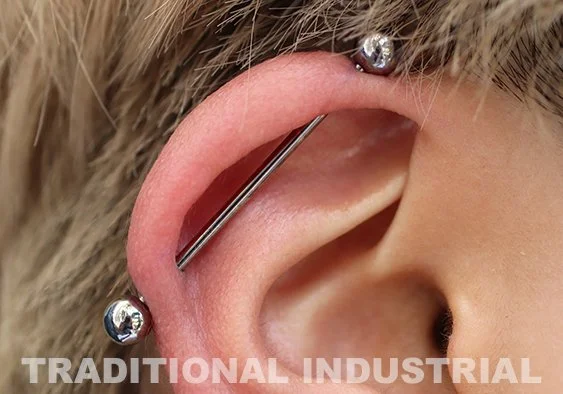
Industrial piercings have remained popular for years — and we love them just as much as you do. That said, they are highly anatomy-dependent.
For a traditional industrial piercing, you must have a prominent outer helix ridge to properly support the jewelry. If the area is too flat, the piercing may not heal well and could lead to irritation or rejection.
During your consultation, we’ll carefully assess your anatomy to ensure it’s a safe fit. And if a traditional industrial isn’t suitable, don’t worry — there are beautiful alternative options available.

If your anatomy isn’t suited for a traditional industrial piercing, a custom bend industrial may be a great alternative.
When the outer ridge of the ear isn’t prominent or begins to flatten, we can create a custom-bent barbell shaped specifically for your ear. This allows the piercing to maintain the look of a traditional industrial while reducing unnecessary pressure and supporting proper healing.
During your consultation, we’ll determine the safest and most flattering option for your anatomy.
GENITAL PIERCINGS
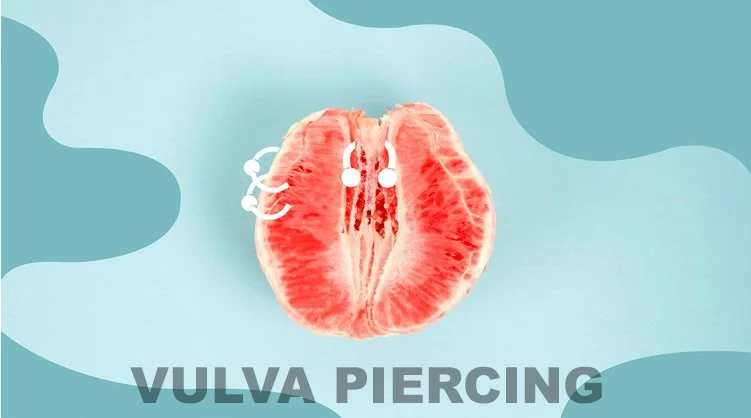
Vulva piercings have been popular for many years and are very safe when performed correctly with appropriate jewelry.
Because every body is unique, a consultation is essential to determine whether the piercing you’re interested in can be safely supported. We’ll carefully assess your anatomy to ensure the best possible placement and healing outcome.
The most commonly requested vulva piercing is the VCH (Vertical Clitoral Hood). Other placements you may wish to research prior to your consultation include: HCH, Christina, Triangle, Glans, Princess Diana, Fourchette, Inner Labia, and Outer Labia.

Penile piercings have been popular for many years and are very safe when performed correctly with appropriate jewelry.
Because everyone’s anatomy is unique, a consultation is essential to determine whether the piercing you’re interested in can be safely supported. We’ll assess structure, placement, and suitability to ensure the best possible healing outcome.
The most commonly requested penile piercing is the Prince Albert. Other placements you may wish to research prior to your consultation include: Frenum (Jacob’s Ladder), Apadravya, Ampallang, Deep Shaft, Dydoe, Foreskin, Guiche, Hafada, Reverse P.A., Scrotal, and Pubic.